

Quick answer
An authentic Portuguese pastel de nata recipe requires puff pastry rolled into spiral molds, a custard made from egg yolks, sugar, milk, flour, and lemon zest, and baking at 250°C to achieve the signature caramelized spots. The tarts bake for 12 to 15 minutes in a very hot oven, creating a contrast between the crisp shell and the soft, barely-set custard. Success depends on high heat and careful timing.
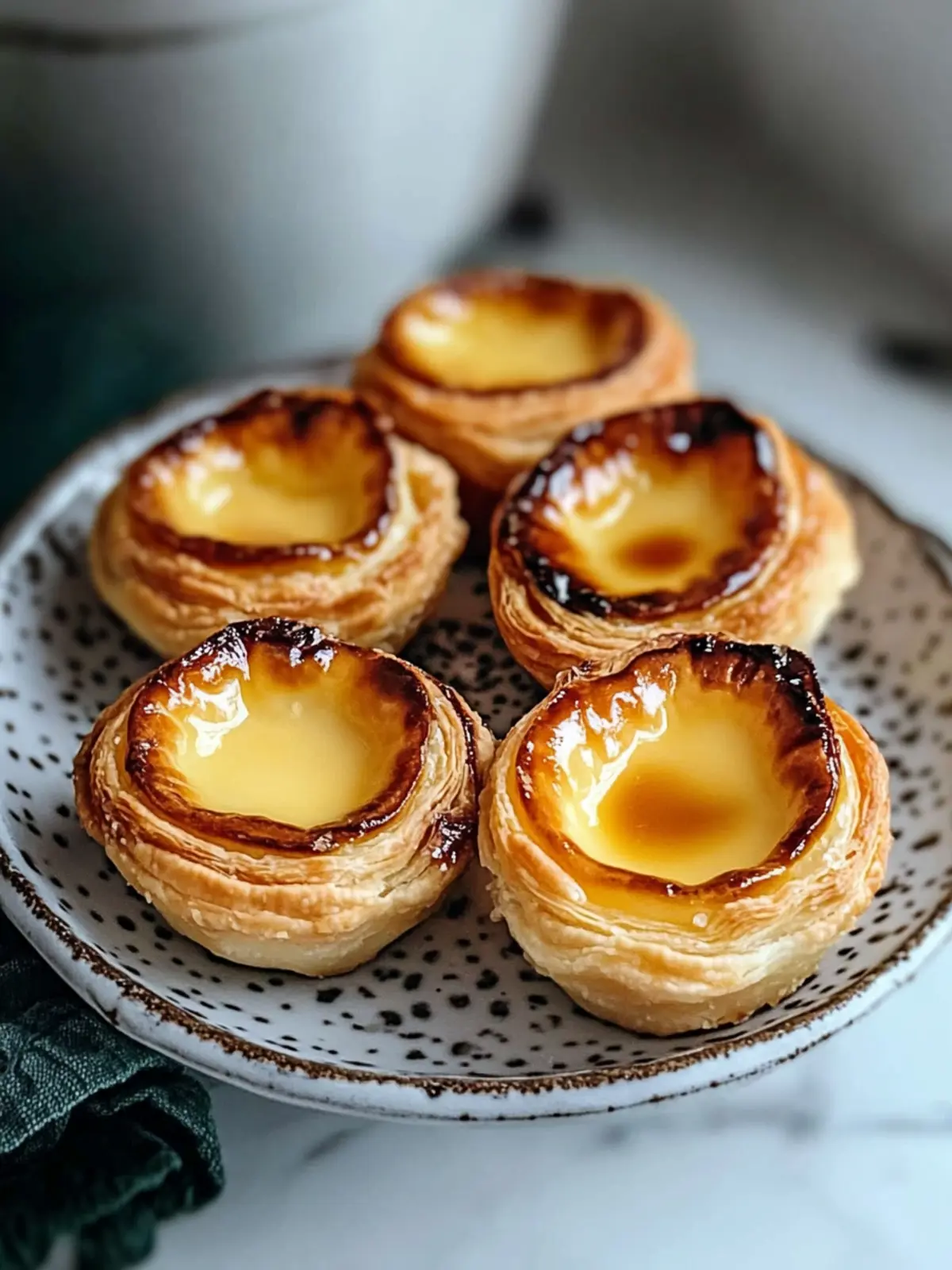
The custard filling in a pastel de nata contains no cream—only whole milk thickened with a small amount of flour and enriched with egg yolks. This keeps the texture light rather than heavy, and the filling remains fluid enough to tremble when the tart is tapped. Most recipes outside Portugal add cream or omit the flour, which changes the structure entirely. The pastry shell is not standard puff pastry but a laminated dough rolled into a tight cylinder, sliced, and pressed into fluted molds. This creates concentric layers that puff and separate in the oven, forming the ridged sides that characterize the tart. Home bakers often substitute store-bought puff pastry, which works but produces a uniform rise rather than the spiral pattern. Rolling the dough yourself takes time but delivers the texture that defines the Portuguese version. Oven temperature matters more than most recipes admit. A pastel de nata recipe demands heat above 240°C—some bakeries in Lagos use wood-fired ovens that reach 290°C. The high temperature caramelizes the sugar on the custard surface in minutes, creating the dark spots that signal doneness. A cooler oven will bake the custard through without browning it, leaving the tart pale and missing the burnt-sugar flavor that makes the dessert recognizable. If your oven runs cool, use the broiler for the final two minutes and watch closely. Lagos bakeries serve the tarts warm, dusted with cinnamon and powdered sugar. The custard is still soft in the center, and the pastry crackles when bitten. Eating them within an hour of baking is not tradition—it is necessity. The shell loses its crispness as it cools, and refrigeration turns the custard dense. This is a dessert that rewards immediacy, which is why the recipe remains tied to the rhythm of the bakery rather than the home kitchen. The ingredient list is short—six components for the custard, one type of dough for the shell—but the method is unforgiving. Overbeating the eggs creates foam, undercooking leaves the custard runny, and a warm oven produces a pale tart. Each step eliminates a margin of error, which is why the dessert is easier to buy than to make well. Still, the process teaches the logic behind the tart: high heat, minimal handling, and respect for timing.
“The custard contains no cream—only whole milk thickened with flour and enriched with egg yolks, which keeps the texture light rather than heavy.”
Mastering the Traditional Portuguese Pastel de Nata Recipe
This traditional recipe requires careful lamination of puff pastry and a custard base cooked to precise consistency. From start to finish, expect around three hours including chilling time.
Prepare the custard base
Whisk egg yolks with sugar until pale, then slowly incorporate warm milk infused with lemon peel and cinnamon. Cook the mixture over low heat, stirring constantly until it coats the back of a spoon—overheating will scramble the eggs.
Laminate the puff pastry
Roll store-bought or homemade puff pastry into a thin rectangle, spread softened butter evenly, then roll it tightly into a log. Chill for at least 30 minutes; skipping this rest makes the dough tear when sliced.
Cut and shape the pastry
Slice the chilled log into 2 cm rounds and press each piece into a greased muffin tin, working from the center outward to form thin, even cups. The walls should reach just below the rim to prevent overflow during baking.
Fill and bake at high heat
Pour the custard three-quarters full into each pastry shell and bake at 250°C for 12–15 minutes until the tops develop dark caramelized spots. The high temperature creates the signature blistered finish that defines an authentic pastel de nata.
Cool and finish with cinnamon
Let the tarts rest in the tin for two minutes, then transfer to a wire rack to cool slightly. Dust lightly with ground cinnamon and icing sugar just before serving; they are best enjoyed warm, not piping hot.
Avoiding Common Errors When Following a Portuguese Pastel de Nata Recipe
Home bakers often encounter texture and flavor issues when attempting pastel de nata. Most errors stem from oven temperature miscalculation, custard handling, or pastry technique.
Setting the oven too low, preventing caramelization and crispness
Preheat to 250°C (480°F) or higher. The custard surface needs intense heat to develop the signature blackened spots and the pastry requires high temperature for proper puff and flake.
Boiling the custard or adding eggs to hot liquid too quickly
Temper the egg yolks by whisking a small amount of warm milk mixture into them first, then gradually combine. Cook gently over medium-low heat, stirring constantly until thickened but never boiling.
Using pre-made puff pastry instead of laminated dough with lard
Traditional recipes call for a butter-lard laminated dough that creates the distinctive crisp, flaky layers. Substitute puff pastry works in a pinch but sacrifices authenticity and texture.
Filling the tins completely, causing overflow and dense centers
Fill each mold only two-thirds full. The custard expands during baking, and overfilling prevents proper heat penetration and creates a soggy center.
Removing the tarts before the tops darken sufficiently
Leave them in the oven until deep brown blistered spots appear on the custard surface. This caramelization is essential for authentic flavor; pale custard indicates underbaking.
Expert Advice for Perfecting Your Portuguese Pastel de Nata Recipe
Achieving professional results in a home kitchen requires attention to equipment details and temperature control.
Heavy-duty muffin tins
Use deep, heavy-duty muffin tins to mimic the thermal conductivity of professional molds. Thin aluminum pans often fail to conduct heat rapidly enough to caramelize the custard surface correctly.
Cold puff pastry
Keep your puff pastry chilled until the final moment of assembly to maintain distinct, flaky layers. Working with cold dough prevents the butter from melting prematurely and ensures the signature crispy texture.
Precision oven calibration
Verify your oven temperature with a separate thermometer as home ovens often fluctuate. High-heat settings are critical for these tarts, and even a ten-degree variation can alter the outcome.
Custard resting period
Allow your finished custard base to rest for at least two hours before filling the shells. This resting time stabilizes the emulsion and ensures a smoother, more consistent texture once baked.
Pastry spiral technique
When rolling the pastry for the shells, create a tight, uniform cylinder to promote even lamination. This specific rolling method is what creates the concentric circles visible in the base of the tart.
Accessing the Portuguese Pastel de Nata Recipe at No Cost
The pastel de nata recipe information is provided as a public resource for home bakers. There are no associated access fees for this instructional content.
Users pay 0 EUR to access these instructions, as the recipe information is provided freely.
Availability of the Portuguese Pastel de Nata Recipe Information
The Portuguese pastel de nata recipe information is available online at all times. You may access these instructions whenever you are ready to begin baking.
| Monday | Closed | |
|---|---|---|
| Tuesday | Closed | |
| Wednesday | Closed | |
| Thursday | Closed | |
| Friday | Closed | |
| Saturday | Closed | |
| Sunday | Closed |
Check availability
Common Questions About the Portuguese Pastel de Nata Recipe
Everything you need to know about portuguese pastel de nata recipe